How to Use a VPN: A Simple Step-by-Step Guide for 2026
Quick Answer
The short version of how to use a vpn: install your provider’s app from the official app store, sign in, tap or click Connect, and pick a server location. After connecting, search “what is my ip” in your browser and confirm the address changed. The full guide below walks through exact steps for iPhone, Android, Windows, Mac, and routers, plus how to verify the connection and avoid the most common mistakes.
A virtual private network sounds technical, but using one in 2026 is as simple as installing any other app. This guide shows how to use a vpn on every device you own, from your phone to your home router, with clear steps and simple checks along the way. No networking knowledge required.
What a VPN Does (and What It Does Not)
A VPN creates an encrypted tunnel between your device and the internet. Everything you send and receive travels through that tunnel, so your internet provider and anyone snooping on the local network cannot read it. It also masks your real IP address by giving you the address of the VPN server you connect to.
That combination protects your privacy on public Wi-Fi, keeps your browsing history out of your ISP’s logs, and lets you access content tied to other regions. A VPN does not make you anonymous, block all malware, or protect information you hand to websites yourself, so treat it as one strong layer of protection, not a magic shield. If you are unsure whether a VPN or a proxy fits your needs, read our VPN vs proxy comparison first.
How to Choose a VPN Service
Setup is nearly identical across providers, so the main decision is which service to sign up for. Look for these four things:
- A clear no-logs policy backed by independent audits. If a provider has never been audited, its privacy claims are just marketing.
- Apps for every device you own. Check that the provider supports iOS, Android, Windows, and macOS, and allows enough simultaneous connections for your household.
- A money-back guarantee. Most reputable providers offer 30 days, which gives you time to test speeds and support.
- A real company behind the brand. Avoid lifetime deals and unknown apps with no published leadership or contact details. Free VPN apps often pay their bills by logging your activity or injecting ads.
Do not overthink this step. For most people, a well-reviewed provider with apps for every platform and a 30-day refund policy is the right starting point. You will set it up once and barely think about it again.
How to Use a VPN on an iPhone
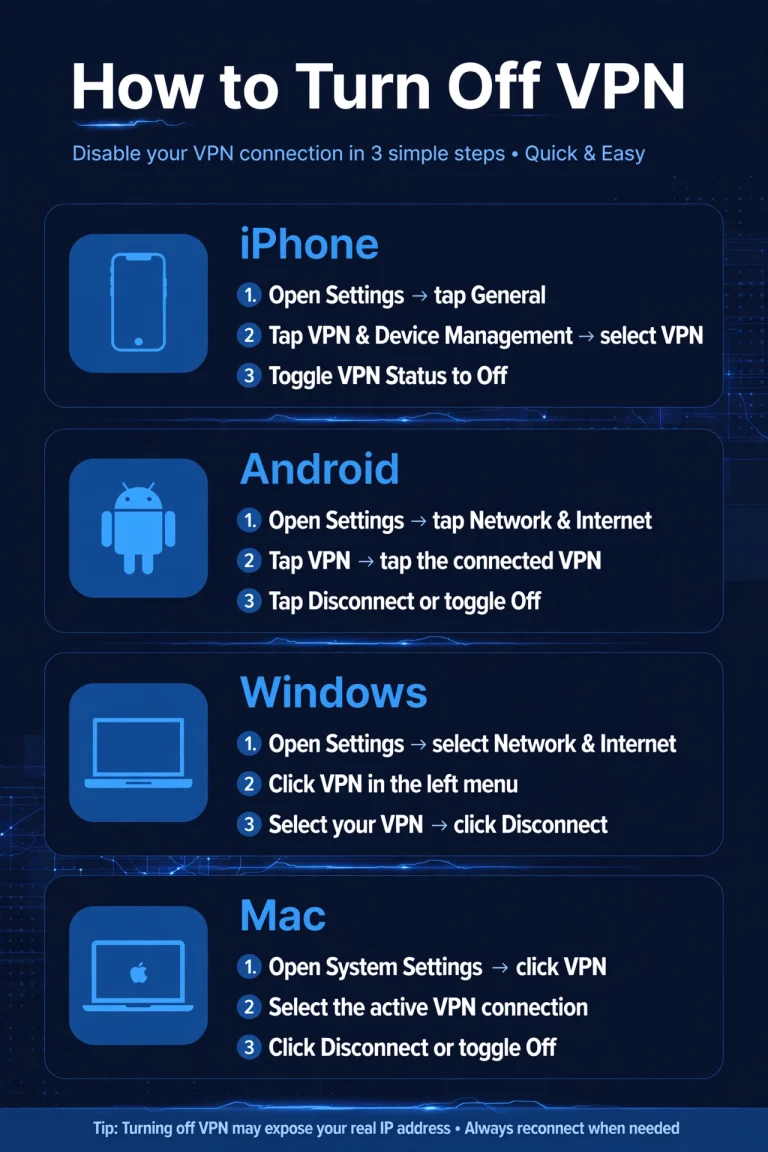
- Open the App Store and install your VPN provider’s official app. Do not download lookalike apps with similar names.
- Open the app and sign in with the account you created during signup.
- Tap Connect. iOS will ask permission to add VPN configurations; approve it with Face ID or your passcode.
- Pick a server location, or use Quick Connect to join the fastest available server near you.
- Confirm the VPN icon appears in the status bar. That icon means all traffic is now tunneled.
For provider picks and setup tips specific to Apple devices, see our dedicated iPhone VPN guide.
How to Use a VPN on Android
- Install the provider’s app from Google Play and sign in.
- Tap Connect and approve the connection request when Android asks. This is a one-time system prompt.
- Choose a server location, or let the app pick the fastest one automatically.
- Look for the key icon in the status bar. When it is visible, the VPN is active.
How to Use a VPN on Windows and Mac
- Download the app from your provider’s official website and run the installer.
- Sign in, then click Connect to join the recommended server.
- On a Mac, approve the system extension or network filter prompt on first launch. Without it, the tunnel cannot start.
- Open the app’s settings and turn on the kill switch, then set the app to launch at startup so you never browse unprotected by accident.
Setting Up a VPN on a Router or Smart TV
Most smart TVs have no VPN apps at all. The practical fix is to run the VPN on your router, which protects every device on your network at once, including TVs, game consoles, and streaming sticks.
- Confirm your provider supports router installation and download its config files or credentials.
- Log in to your router’s admin panel and find the VPN client section.
- Enter the credentials or upload the config file, then save and connect.
- Visit a “what is my ip” page on any connected device and confirm it shows the VPN server’s location.
This is the most advanced setup in this guide, so follow your provider’s router tutorial step by step. Once it is running, every device on your network benefits without installing a single app.
How to Check If Your VPN Is Working
Connecting is not enough. A misconfigured VPN can leak your real IP or DNS requests while looking active. Run this quick two-minute check after every new installation:
- Before connecting, search “what is my ip” and note your address and location.
- Connect the VPN, refresh the search, and confirm the IP address and location now match the server you picked.
- Run a DNS leak test and confirm the servers shown belong to your VPN provider, not your internet company.
- If anything looks off, disconnect, switch to a different server, and test again.
If you want a second opinion on your results, Mullvad documents IP and DNS leak checks in its official help center.
VPN Setup Quick Reference by Device
Use this table as a cheat sheet once your account is ready.
| Device | Install From | How to Confirm It Is Active |
|---|---|---|
| iPhone | App Store | VPN icon in the status bar |
| Android | Google Play | Key icon in the status bar |
| Windows | Provider website | Kill switch enabled in app settings |
| Mac | Provider website or App Store | System extension approved, app shows connected |
| Router / Smart TV | Router admin panel | All devices show the VPN server’s IP |
Pro Tip
Turn on the kill switch on every device. If the VPN connection ever drops, the kill switch blocks all internet traffic until the tunnel reconnects, so your real IP never leaks. It is the single most important setting for anyone connecting on public Wi-Fi.
Common VPN Mistakes to Avoid
- Trusting free VPN apps blindly. Free providers still have server bills to pay. If you are not paying, your data or attention is usually the product.
- Connecting once and never testing. Run the IP and DNS leak check after setup and again after major app updates.
- Expecting total anonymity. A VPN hides your traffic from your ISP, not from services where you log in with your real identity.
- Ignoring the kill switch. Without it, a dropped connection silently returns you to an unprotected line.
- Using it to dodge streaming rules without caution. Some services flag or restrict accounts that jump regions repeatedly.
When to Turn On Your VPN
- Public Wi-Fi. Cafes, airports, and hotels are the classic danger zone. Connect before you open anything sensitive.
- Travel. Access your usual services abroad and keep banking sessions private on hotel networks.
- Everyday privacy. If you would rather your ISP not log every site you visit, keep it on at home too.
- Work from anywhere. Many employers require a VPN for remote access, and the setup works exactly the same way.
Note
A VPN cannot protect you from phishing, weak passwords, or data you hand to a website voluntarily. Pair it with updated software and a password manager for real protection.
Key Takeaways
- Learning how to use a vpn takes about five minutes: install the app, sign in, connect, and verify your IP changed.
- Always verify the connection with an IP and DNS leak check after a fresh installation.
- Enable the kill switch on every device so a dropped tunnel never exposes your real IP.
- Paid providers with audited no-logs policies are safer than free VPN apps.
- A router setup covers devices with no VPN app, like smart TVs and game consoles.
Frequently Asked Questions
Is it legal to use a VPN in the US?
Yes. Using a VPN is completely legal in the United States and most of the world. A small number of countries restrict or ban them, so check local rules before traveling with one.
Will a VPN slow down my internet speed?
Slightly. Encryption and routing through a distant server add some overhead, usually 5 to 15 percent with a good provider. Connecting to a nearby server keeps speeds close to normal, and modern protocols like WireGuard are noticeably faster than older ones.
Can I use a VPN on multiple devices at once?
Yes. Almost every paid provider includes 5 to 10 simultaneous connections on one account, which covers a typical household. If you need more, installing the VPN on your router protects every device on the network while counting as a single connection.
Is a free VPN safe to use?
Usually not. Free VPNs need revenue from somewhere, and the common sources are ads, bandwidth resale, or logging your activity. If cost is the concern, look for reputable providers with money-back guarantees or limited free tiers from trusted brands.
Do I need a VPN if I only browse at home?
It depends on your threat model. Your home network is safer than public Wi-Fi, but your ISP can still see and log your browsing. If that bothers you, keeping a VPN on at home is a reasonable privacy choice.
What should I do if my VPN will not connect?
First, try a different server location, then restart the app and your device. If it still fails, switch the VPN protocol in the app’s settings or check whether your network blocks VPN ports, which some workplaces and schools do. Your provider’s support team can walk you through the rest.